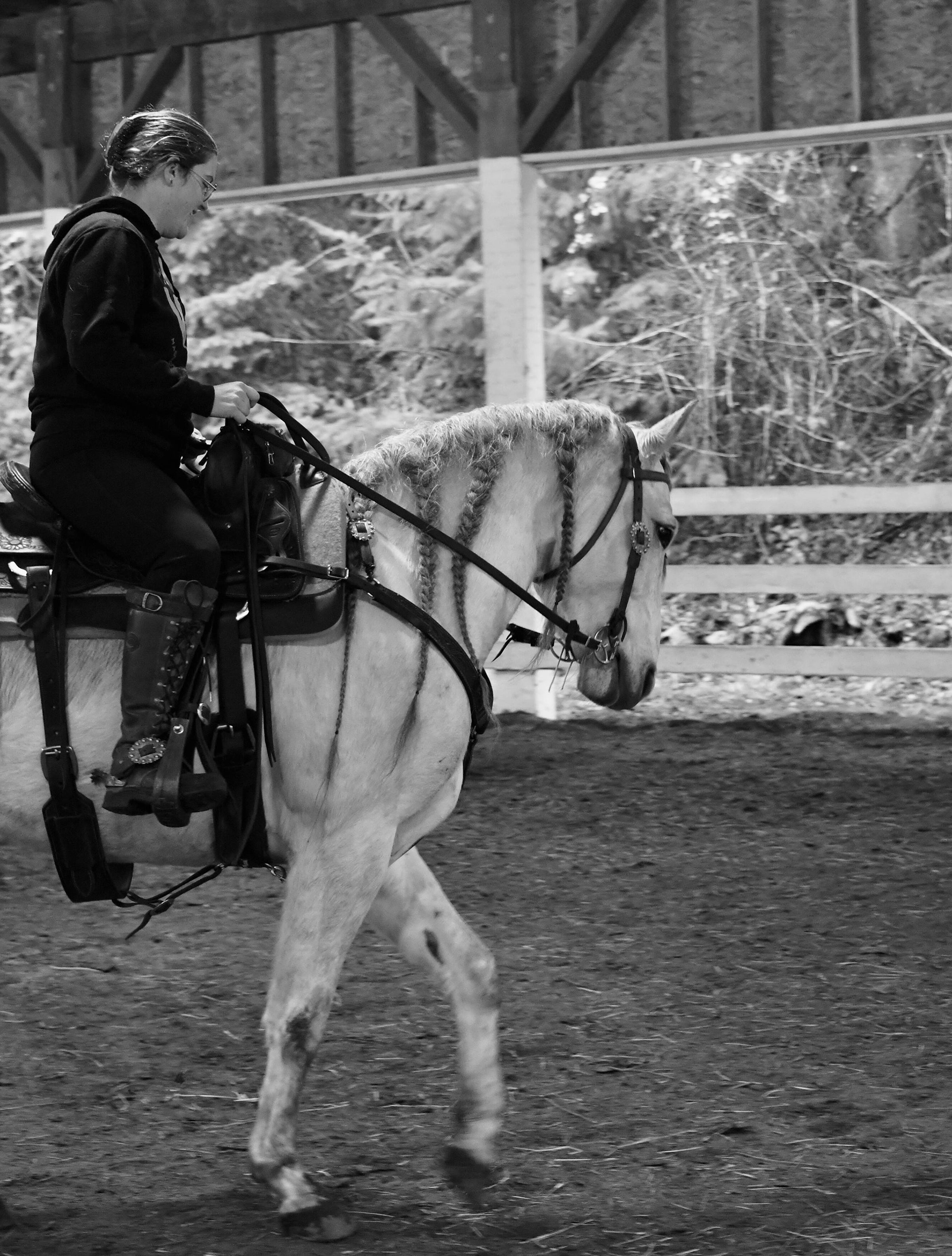
The rigors of training refers to the learning process your horse goes through every time they are presented with something new. This framework can be used on a micro scale (how you work through something within a single ride) or on a macro scale (an entire training block or show season).
It describes the four basic steps of how physical learning happens and can be applied to most training situations. In this post, I’m going to focus mostly on the macro scale, but know that I use this framework daily in my interactions with horses.
Understanding this process can help you make better decisions for your horse, like when to schedule more frequent bodywork or when to increase the challenge in your training block before a competition.
The process looks like this:
1. Introduction to a challenge (a new task)
This step begins with a goal.
Show season is heading our way. Spring sunshine and good riding weather are finally returning. Many people, myself included, are beginning to solidify their plans for the year. This usually means starting a new training block or getting your horse back into working shape.
The “new challenge” is the work it will take to reach that bright and shiny goal at the end of the tunnel.
With the introduction of a new challenge comes new strain on the body. Strain does not automatically mean something bad. Think of progressive overload in weightlifting or endurance training in distance running. Strain is necessary for improvement, but being aware of it helps prevent injury. Remember, even if your horse is a seasoned professional, an increase in intensity or frequency still counts.
Massage can help flush lymph out of newly sore muscles and address any fascial restrictions that may limit full and efficient range of motion. However, it’s best to be mindful of your training schedule when booking sessions during this phase. Ideally, your horse should have a light day or a rest day afterward, as these sessions can sometimes be mentally challenging.
2. Repeat the challenge
(proficiency creates confidence, but mental and physical fatigue can create frustration)
After the introduction of a new challenge comes repetition.
Repetition is essential for learning new movement patterns and strengthening them. It also builds endurance and power. It’s a fundamental part of practice. However, repetition has its drawbacks. Performing the same movements over and over places stress on the same tissues and can eventually lead to repetitive stress injuries.
Ideally, during this phase of learning, you are aware of your horse’s movement patterns and are repeating healthy ones.
If I had to pick the most ideal time during a training block for a bodywork session, this would be it.
At this stage, massage can be extremely helpful for supporting recovery from training sessions and relieving the tension that builds during the learning process. Often, the frequency of sessions may need to increase to better support the equine athlete.
For example, during my sorting and penning seasons, we do a lot of drilling so that certain movements become automatic in competition. During those months, I make sure to include a weekly strength-focused day to help my horse cope with those demands, and I stay on top of bodywork. I have the luxury of doing small amounts of work after most rides, but during this part of the season I also try to schedule bi-weekly sessions.
3. Rest and recovery
After you introduce a challenge and repeat that challenge to proficiency, it’s time to take a step back.
This can be as simple as a few days off from riding or switching to groundwork for a day or two. In the middle of show season, this might look like cross-training or going for a trail ride.
This period allows both the nervous system and the musculoskeletal system to recover from the stress of the previous phases.
Rest is actually one of the most important parts of making progress. To build strength, muscles develop small micro-tears that only heal and adapt during rest. Emotionally and mentally, stepping away creates space for nervous system regulation and for new learning to settle in.
On a macro level, this looks like changing up your routine. On a micro level, it can be something as simple as stopping in the corner after a great lead change, letting your horse fully catch their breath and relax.
Massage during this phase supports muscular recovery and helps the fascial system integrate new patterns. That said, one of the best ways to encourage recovery and healing is gentle movement. Hand walking or light lunging are wonderful options.
When I work with horses in this phase, I often include soft muscle activations and gentle balance work. Balance pads can be especially helpful here, as the varied surface stimulates proprioceptors and the nervous system