Proprioception is the unconscious perception of self. It is how the body senses movement, force, and position in space.
Proprioception is controlled by proprioceptors, which are mechanoreceptors located in muscles, tendons, joints, and skin. There are several types of proprioceptors, but the key ones include muscle spindle fibers, which detect changes in muscle length; Golgi tendon organs, located in the musculotendinous junction and responsible for detecting load on the muscles; and Ruffini endings and Pacinian corpuscles, found in the joint capsules, which sense slow changes in joint position and pressure as well as dynamic changes in movement and acceleration.
All animals possess proprioceptors, including humans and horses. When stimulated, these sensors send rapid electrical signals to the central nervous system, meaning the spinal cord and brain. This system, combined with the visual and vestibular systems, is responsible for motor control, postural stability, and the constant updating of our internal map of the body.
Without proprioception, we would not be able to move through the world with flow or accuracy, and injury would quickly become common.
Proprioception in Horses
When you think about it, proprioception is necessary for every discipline, from dressage and jumping to cutting and reining. A horse’s awareness of its own body in space is directly tied to its ability to move athletically and fluidly. As intensity and risk increase, such as in eventing or reined cow horse, proprioception becomes even more critical, as it is essential to the safety of both horse and rider.
It also plays a major role in injury prevention. When horses are tuned into their own bodies, they can make subtle adjustments for small imbalances before those issues escalate.
In my opinion as an equine massage therapist, proprioception should be foundational to all horse training. I believe we should devote significant time and attention to it, because improving proprioception will without question enhance athletic ability.
There are many factors that influence proprioception, including age, overall health, hoof condition, training methods, and previous injuries. As discussed earlier, proprioceptors are activated through movement of the musculoskeletal system. The way we choose to keep and train our horses can have a major impact on how they move and therefore how their proprioceptive system develops.
In their natural environment, young horses navigate varied terrain, obstacles, and a wide range of stimuli. Compare that to a show horse kept in a stall on even footing. That environment provides far less input and may not offer enough stimulation to fully develop proprioception. As with many aspects of movement, it is very much a use it or lose it situation.
Signs of Proprioceptive Challenges
Many signs of proprioceptive issues can overlap with clinical signs of neurological damage. If your horse seems to be experiencing these problems, it is important to rule out neurological causes with a veterinarian before addressing proprioception directly.
Some signs that your horse could benefit from more proprioceptive work include frequent stumbling or tripping, uneven gaits, difficulty with specific movements such as circles and transitions, lack of coordination either over obstacles or during starts and stops, loss of balance, shifting weight off one limb, or consistently favoring one side over the other.
If an underlying medical issue has been ruled out, there are several ways you can intentionally improve your horse’s body awareness through training and handling.
Ways to Improve Proprioception
Ground poles or raised poles
Especially when done slowly at the walk, one foot at a time, poles encourage horses to become aware of their footfalls without relying on momentum. Performing pole work at the walk or trot can also improve rhythm and timing.
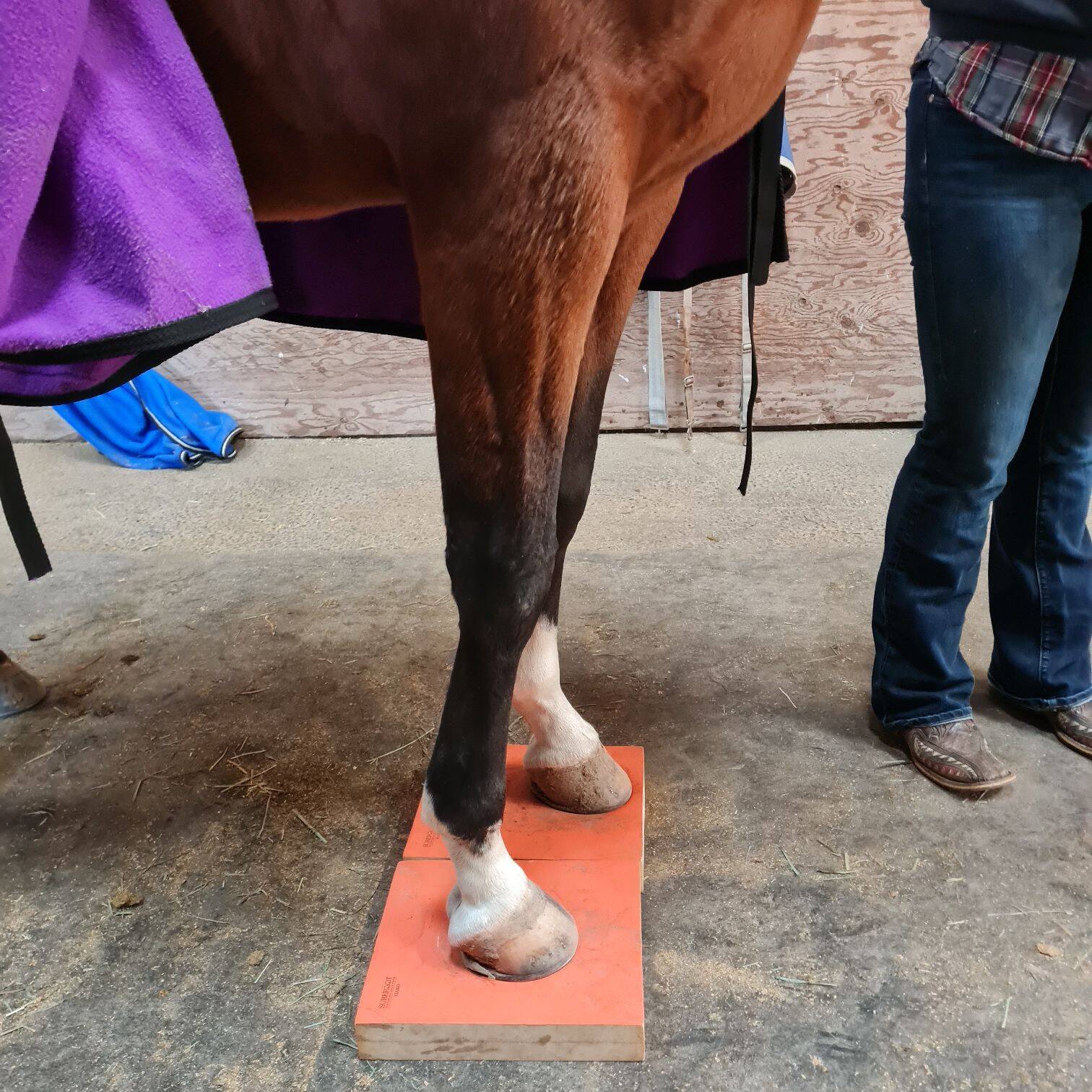
Balance pads
These are one of my current favorites. Balance pads communicate directly with the nervous system by creating an unstable surface that demands attention to balance and spatial awareness. They strongly engage the small postural muscles.
Varied terrain
Different footing provides different sensory feedback, much like balance pads do. This can include hill work, which challenges both coordination and balance. Trail riding is an excellent way to incorporate this naturally into your routine.
Riding patterns and curved lines
When done correctly, exercises such as circles, figure eights, and serpentines with frequent changes of direction and bend help strengthen the horse and bring awareness to lateral balance.
As mentioned earlier, working intentionally on proprioception will improve coordination and athletic performance. It will also likely reduce the risk of repetitive stress injuries.
Bodywork and Proprioception
Because proprioception is mediated by mechanoreceptors in soft tissue and joints, different forms of bodywork can positively influence this system. Reducing tension and increasing circulation allow muscles to operate through a fuller range of motion, which in turn provides more varied proprioceptive input.
When I am specifically aiming to influence the proprioceptive system, I sometimes use tools such as kinesiology tape and balance pads. These stimulate sensory receptors in different ways and bring awareness to movement patterns. I also incorporate limb movements or gentle stretching after working on restricted areas to help the body recognize that tension has been released.
If this sparked any curiosity about your horse’s movement or training, maybe try adding just one small proprioceptive exercise into your routine this week and see what you notice.
And if you’d like to keep thinking about horsemanship, bodywork, and thoughtful training with me, you’re welcome to stay. Subscribe if you’d like to follow along, share it with a barn friend, or reach out anytime. I’m glad you’re here.
Sources
https://www.sciencedirect.com/topics/neuroscience/proprioception
https://www.polltopastern.com/post/proprioception-in-horses