Practice.
- To perform an activity or exercise repeatedly or regularly in order to improve or maintain one’s proficiency.
- To carry out or perform (a particular activity, method, or custom) habitually or regularly.
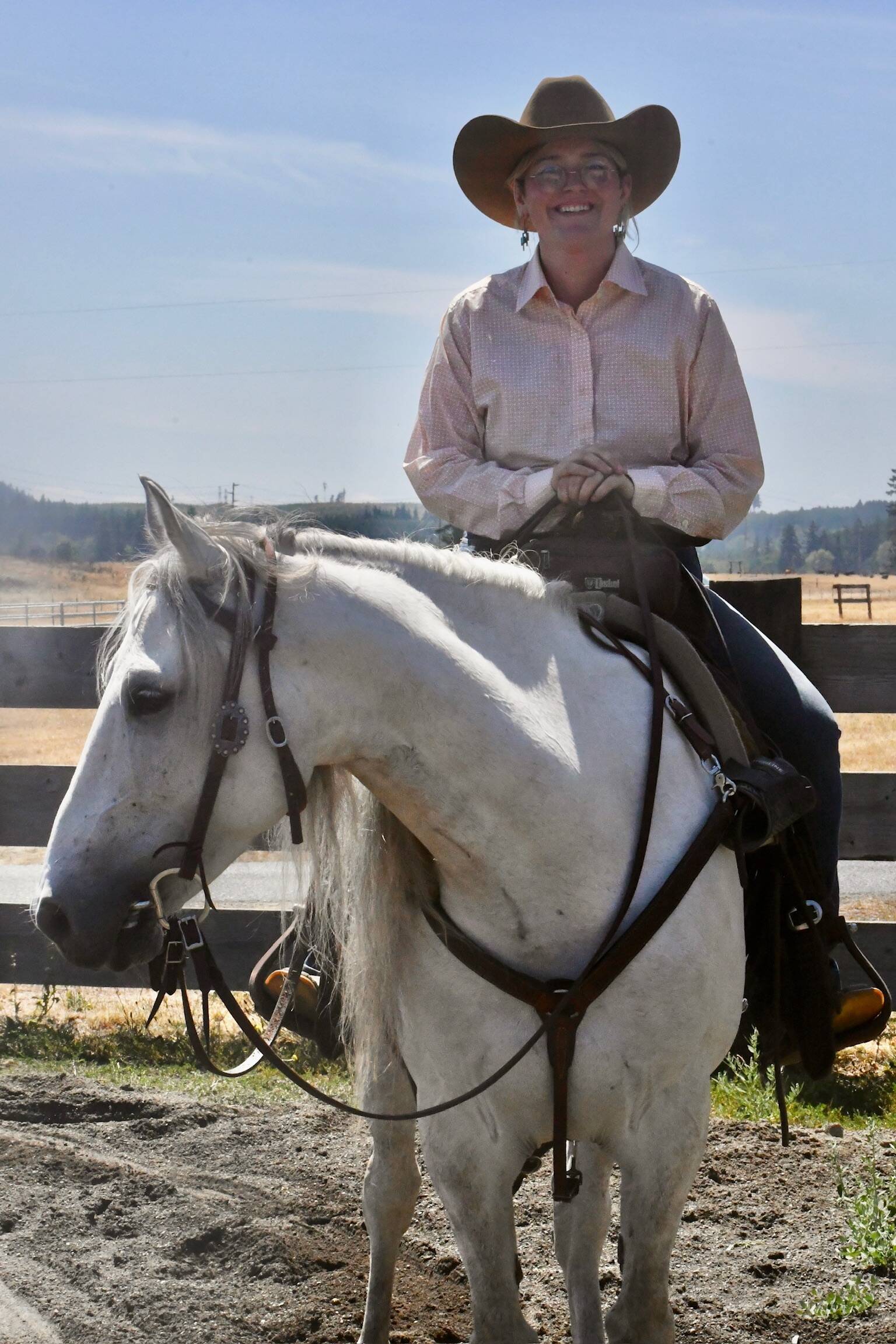
The first definition was what I thought of as practice growing up. The purpose was simple: to get better. And when that didn’t feel like it was happening, I became frustrated. I usually resented having to practice at all. I didn’t enjoy doing things I couldn’t immediately do well. If doing it more didn’t make me exponentially better every time, what was the point? Violin, soccer, and gymnastics all petered out of my life. However, horses never did. I suspect that had to do with the fact that I never really thought of riding as “practicing” in the same way. Horses were part of me—part of my identity—something I did for the sake of doing.
In June of 2024, when the spring air started to heat up and I had forgotten that it would again be cold and dark, I started running. I cannot tell you what compelled me to start, because if I had to do it again, I’m not sure I could. Most notably, I am not a good runner. Honestly, I didn’t even like running. That was the point. I wanted to show myself that I could do something I was bad at. I didn’t need to be fast; I didn’t need to be good; I didn’t even really care if I improved. My only goal was consistency. This was what practice began to mean to me: just doing it. I showed up—somehow—at least three days a week for an entire year, and went from running my first mile, to my first 5K, to a 12K. This year, I am setting my sights on a half-marathon. But I am still just running as a practice. I find it easier to be consistent with external goals, but even without them, I wouldn’t stop running. It has become a way to clear my head, get outside, and move the energy around my body. It has become something close to meditation. I am still not sure if I like it, but I will show up.
It feels like I have ridden horses my whole life. I began at the age of five, which makes horsemanship my oldest practice. After a 2024 full of FOMO and an inspiring trip to the Run for a Million in the fall, I set my sights on learning to sort and pen. Again, like running, this was far outside my natural wheelhouse—lots going on, lots of uncontrolled variables. I was (and am) not very good at it. This was challenging in a lot of ways; it made me get down to the nitty-gritty of what I was actually doing while riding. The amount of feedback cows can give you is intense at times and can make improvement feel impossible. Practice, in the more literal sense, was yet again going to take up a bunch of mental space.
Our barn group attends Saturday events that we call “practices,” just like in the good old days when I went to soccer practice—a physical space to focus on getting better at the task at hand. Getting to these practices is tough because they require extra planning and a commitment of time. At first, I tried to improve as much as possible with as little time committed as possible. However, I learned very quickly that intensity of focus with too few repetitions was not going to get me anywhere, and so I pushed myself to show up as often as scheduling allowed. There’s something to that—just showing up. The simple act of regularly doing something yields incremental improvements and learning, and it takes the pressure off of each success and failure.
Because two brand-new challenges in 2024 weren’t enough, I decided to get involved with Working Equitation with my personal horse — Leroy. He was going through a retraining period from his previous job as a hunter pleasure horse on the Arabian circuit, and I was rediscovering dressage. I grew up riding dressage, and it was always there in the back of my mind, showing me the connections between all of the disciplines I rode. I realized that to do Working Equitation, we would really need to focus on the “dry work” portion and get the dressage up to snuff. This led me down a path of discovery with the classical masters and classical dressage.
Hand in hand with my bodywork practice, this practice of horsemanship for the wellbeing of the horse has become a guiding principle for me. Practicing this type of horsemanship is much more than just improvement—it's striving towards an art form. It’s the connection I was always trying to draw between every horse I rode, and it’s a framework for me outside of competition. It includes reading, study, active riding, and observation. It includes functional anatomy and understanding the body scientifically. I would now consider myself an active student of classical dressage, as a support and foundation for all of my other goals. This student mindset has reignited a fire in me for learning, and honestly there’s nothing more exciting than realizing how much you still have to learn.
I had also been applying the same thinking to my business. I made a promise to myself when I started working on horses to prioritize continuing education. I cherish my daily reading time every morning before everyone wakes up. Again, I didn’t give myself a goal of how much to read—just a goal to read something. I began to look forward to it, and now it is sacred time to me.
In the same vein, study without context can only go so far. In my bodywork practice, I have greatly valued my hands-on experience. Nothing can replace the repetition of working on, observing, and holding space for many different horses. I draw not only on the experiences from this current iteration of my practice but also on my practices of observing horses that date back to when I was working with show horses and rescues. In my previous employment, it was my job to notice things and, when appropriate, do something about them. That’s really what I do now, with the techniques I have learned. While on the surface this bodywork practice may appear different from my horsemanship practice, at the core they utilize the same teachings and experiences. When I lay my hands on a horse now, I am bringing to that moment decades of showing up.
The act of practicing is an art. In the words of Brad Stulberg, it’s “an ongoing process of becoming.” It’s the middle part of the journey—after you start, when things aren’t new and shiny anymore. There’s practice. It’s there, in the quiet moments, when no one sees you. It’s there, creating your highlight reels and guiding you through those high, shiny moments. It’s there when you aren’t sure what step to take next. The simple act of doing, showing up, being, and practicing is enough.
Somewhere along the way, my promise of consistency turned into a practice—a horsemanship practice, a bodywork practice, a running practice. Lately, I’ve been grappling with that sense of what to do next. I spent all summer chasing goals that I met with simple consistency. My highlight reel for the year is over; my deadlines for next year are far out. It’s now the time for the practice. I am somewhere in the middle of the journey—the part where “the point” is hard to see, where change is incremental and almost unnoticeable, where there is nothing to be done other than to show up. To practice.


